

Ohio Auto Transport
Car shipping between Ohio's major cities and the wider Midwest carrier network
Ohio's three largest cities — Columbus, Cleveland, and Cincinnati — sit at the corners of a triangle formed by I-71, I-70, and I-75, making the state one of the more carrier-dense parts of the Midwest. Velocity Auto Transport uses that density to schedule shipments efficiently, whether a vehicle is moving within Ohio, connecting to a neighboring state, or heading further afield through the state's central position in the national interstate system.
Written quotes for your actual route — no deposit before a carrier is assigned.
A hub for Midwest carrier traffic
Ohio's location, roughly equidistant from Chicago, New York, and the Southeast, makes it a natural stopover and routing point for long-haul auto carriers. Columbus in particular sits near the intersection of I-70 and I-71, and this central position generally translates into more scheduling flexibility for Ohio shipments than in less-connected states.
Three distinct metro markets
Columbus, Cleveland, and Cincinnati each have their own character and vehicle markets — Columbus with a growing tech and logistics presence, Cleveland with an industrial and healthcare-driven economy along Lake Erie, and Cincinnati anchored near the Ohio River and the Kentucky border. Carriers serve all three regularly, and cross-state moves between them are common enough that Velocity treats them as a routine in-state lane.
Lake Erie winter weather
Cleveland and other Lake Erie shoreline cities are prone to lake-effect snow, which can produce intense, localized snowfall in a short window during winter months. This is worth planning around if you're shipping to or from the Cleveland area between roughly November and March, since carriers may need to adjust timing around a heavy snow band.
Urban access in older neighborhoods
Parts of Cincinnati, Cleveland, and older Columbus neighborhoods have narrow streets, steep hills, or limited parking that can make direct driveway pickup impractical for a large carrier. In these cases, meeting at a nearby commercial lot or wider street is the standard, sensible solution, and your coordinator will typically flag this in advance if your address looks tight.
Open vs. enclosed transport
Open transport is the standard, cost-effective option for the large majority of Ohio shipments, including everyday commuter vehicles and dealer transfers between the state's major cities. Enclosed transport is a reasonable choice for classic and collector vehicles, which have a solid following in Ohio, or for any vehicle you'd rather protect from winter road salt during a cold-season move.
Why people ship vehicles in Ohio
Relocation tied to jobs in Columbus's growing tech and finance sector, Cincinnati's consumer goods and healthcare industries, and Cleveland's manufacturing and medical institutions all contribute to steady demand. College-related moves are common given Ohio's large university population, and dealer and auction vehicle transport is frequent given the state's central Midwest location.
Preparing for pickup and delivery
If your address is in a dense or hilly older neighborhood, confirm with your coordinator whether a nearby meeting point makes sense. Take photos of the vehicle before pickup, and during winter months, check for road-salt exposure and any weather-related delays discussed with your carrier. Inspect the vehicle carefully at delivery before signing the paperwork.
Not sure which equipment or timing fits? How auto transport works walks through the process end to end, and car shipping costs explains every pricing input. You can also compare open and enclosed equipment, or contact us with the route.
Markets we coordinate
Columbus · Cleveland · Cincinnati · Toledo · Akron · Dayton · Youngstown · Canton
Transport in these areas is arranged through the carrier network. We do not operate offices or terminals in these locations.
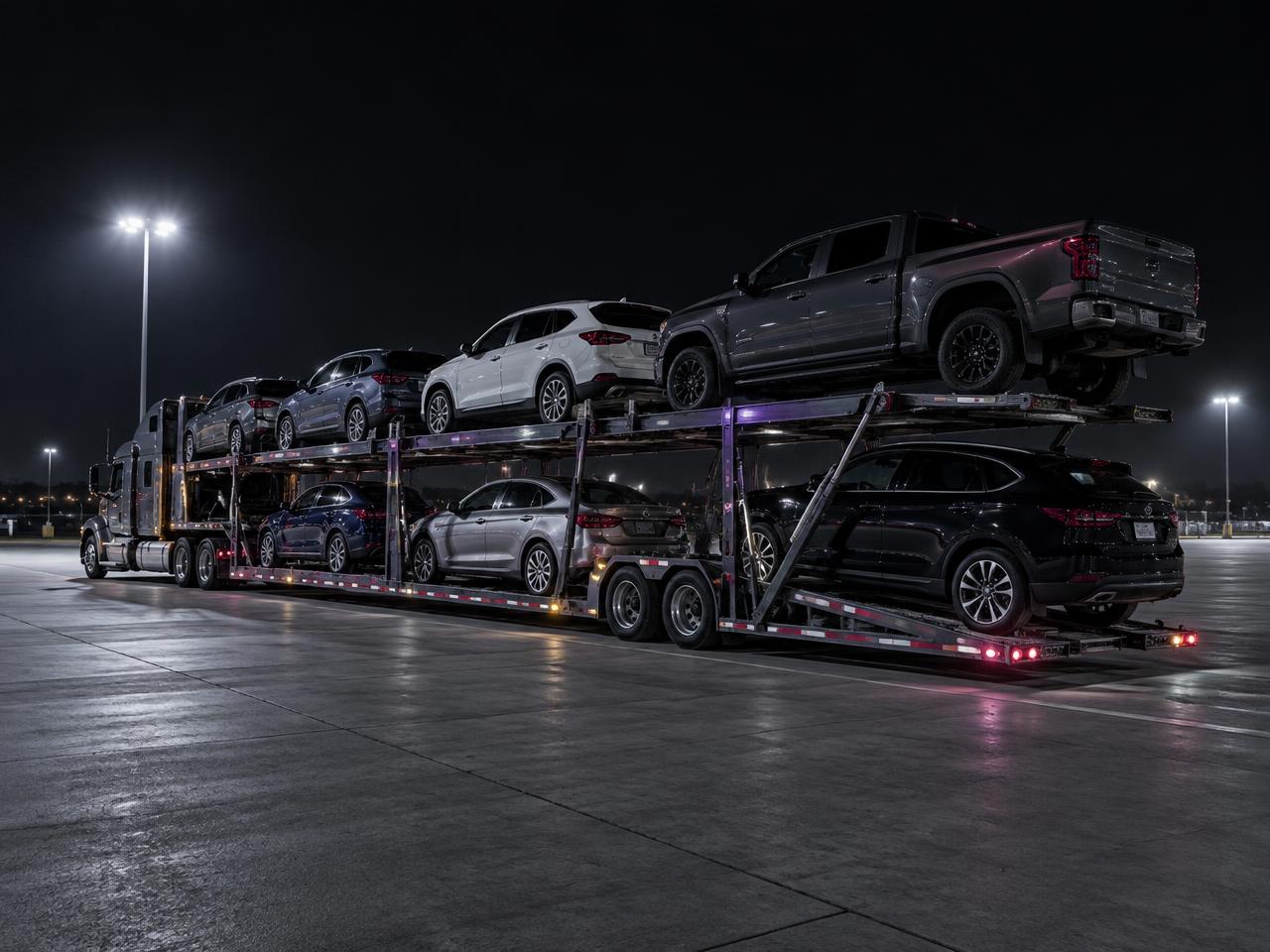
Velocity Auto Transport Group LLC is an auto transport brokerage. We arrange vehicle transportation through qualified motor carriers and coordinate your shipment from quote to delivery — the carrier assigned to your vehicle operates the truck.
Corridors
Lanes that matter for Ohio
Corridor density is one of the biggest reasons two shipments of similar distance price and schedule differently.
I-70 through Ohio
Runs east-west through Columbus and Dayton, connecting toward Indiana and Pennsylvania.
I-71 through Ohio
Links Cleveland, Columbus, and Cincinnati directly, forming the backbone of Ohio's in-state carrier lane.
I-75 through Ohio
Runs north-south through Toledo, Dayton, and Cincinnati, connecting toward Michigan and Kentucky.
Ohio – Florida
A well-established seasonal and relocation lane, often routed through I-75 and I-71 toward I-75 South.
Plan around this
Ohio planning considerations
- Lake-effect snow near Cleveland: Winter shipments to the Lake Erie shoreline can see rapid, localized snowfall affecting timing.
- Older urban neighborhoods: Narrow or hilly streets in parts of Cincinnati, Cleveland, and Columbus may need a nearby meeting point.
- Central Midwest connectivity: Ohio's location generally supports flexible scheduling given heavy through-traffic.
Questions
Ohio car shipping questions
Related guides
Keep planning your Ohio shipment
Detroit car shipping
City-level pickup and delivery detail.
Open guideChicago car shipping
City-level pickup and delivery detail.
Open guideMichigan car shipping
Neighbouring state guide.
Open guideIndiana car shipping
Neighbouring state guide.
Open guideKentucky car shipping
Neighbouring state guide.
Open guidePennsylvania car shipping
Neighbouring state guide.
Open guideNationwide car shipping hub
How nationwide vehicle transport works, and every state guide.
Open guideGet a quote
Get a quote for your Ohio shipment
Tell us the route, the vehicle and its condition. We review current carrier-market conditions on your lane and come back with a written quote we can stand behind.