
Open auto transport
The everyday standard for shipping a vehicle
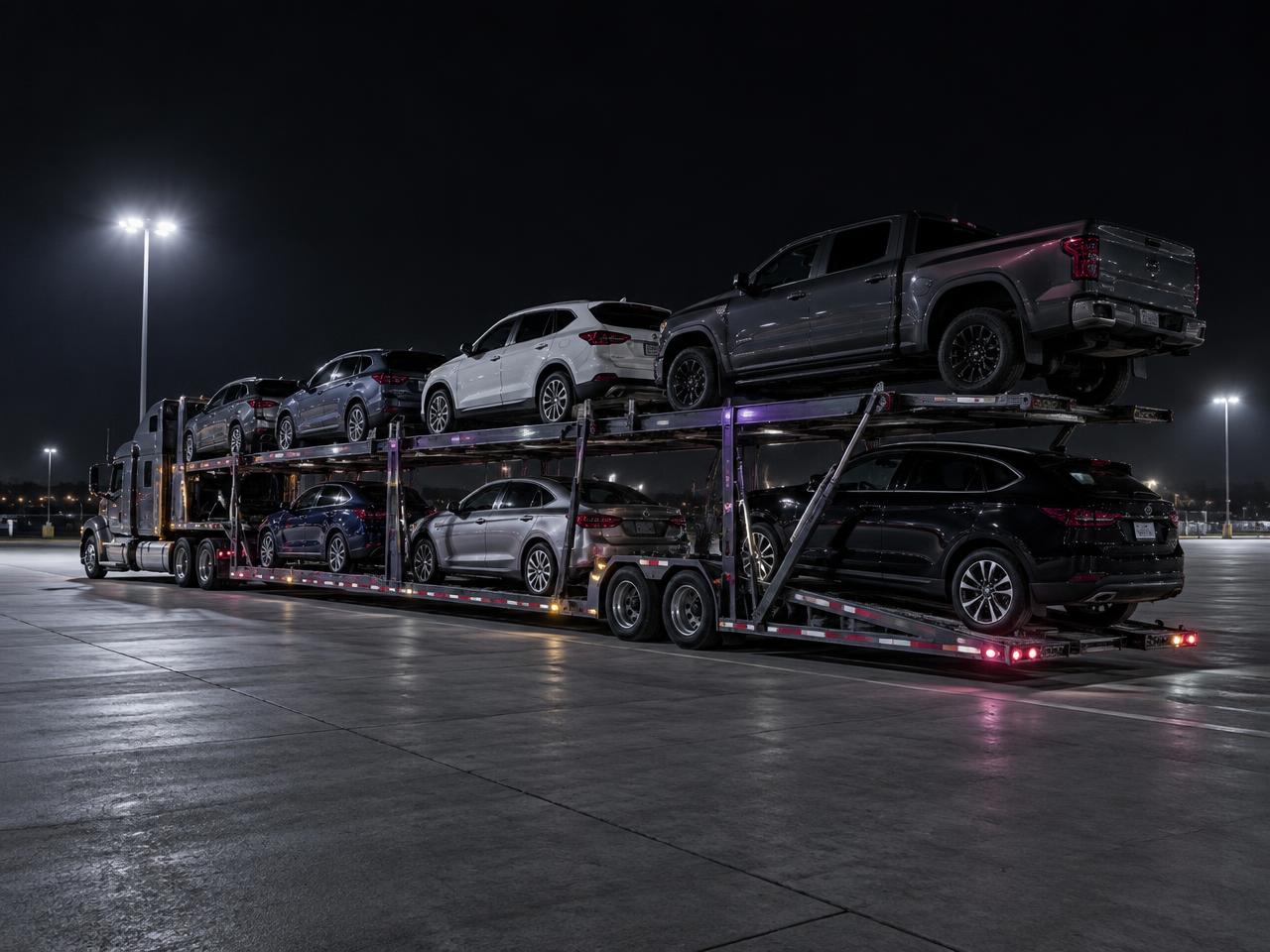
Multi-level open trailers move most of the vehicles on American highways, including brand-new dealer stock. More carriers run open equipment than anything else, which means shorter waits and lower prices on almost every lane.
Quotes are free to request. Nothing is charged unless you accept an offer.
- Equipment
- Multi-level open carrier, 7–10 vehicles
- Best for
- Daily drivers, SUVs, trucks, dealer stock
- Availability
- Widest carrier supply of any equipment type
- Next step
- Request a reviewed written quote
- Who it suits
- Standard production vehicles
- Loading
- Driven or winched up ramps
- Access
- Truck length decides the meeting point
- Exposure
- Weather and road film are normal
Sedans, SUVs, crossovers, pickups, auction and private-party purchases.
Secured through the wheels at four points and recorded on a bill of lading.
Tight streets often mean a nearby lot; that is still door-to-door service.
Road spray is not damage. Choose enclosed if that matters for this vehicle.
How an open carrier actually works
A full-size open carrier is a two-level steel trailer that typically holds seven to ten vehicles. Cars are driven or winched up ramps, positioned to balance axle weight, and secured through the wheels with straps or chains at four points. The driver inspects and records the condition of each vehicle on a bill of lading before it moves.
Because the trailer is roughly 75 to 80 feet long, access matters more than most people expect. Residential streets with tight turns, low branches or steep grades often mean meeting the driver at a nearby shopping center or wide shoulder. That is still door-to-door service; it just respects what a legal, safe load can physically do.
Which vehicles suit open transport
- Daily drivers, family sedans, SUVs and crossovers
- Pickup trucks, including most lifted and dually configurations
- Dealer inventory and wholesale units
- Auction purchases and private-party buys
- Inoperable vehicles that still roll, steer and brake, on winch-equipped trucks
When to step up to enclosed
Consider enclosed if the vehicle is exotic, freshly restored, show-prepared, unusually low, or simply irreplaceable to you. The relevant question is not whether open is "safe"; it is whether road film, weather exposure and ramp clearance are acceptable for this specific vehicle.
Good to know
- Lowest cost equipment type on the large majority of lanes
- Shortest typical assignment window because supply is highest
- Weather and road spray exposure is normal, not damage
- Leave roughly a quarter tank of fuel and confirm personal-items arrangements with your coordinator before loading
Questions
Open transport questions
How we work
What you can expect from us
Our role in your shipment
Velocity Auto Transport Group LLC is an auto transport brokerage that works with independent motor carriers. The assigned carrier operates the transport vehicle.
Written quotes, reviewed by a person
Your route, vehicle and timing are reviewed against current carrier-market conditions before we send a quote. No instant algorithmic number that changes after you book.
One point of contact from quote to delivery
You reach the same team for scheduling changes, pickup windows and delivery updates rather than a call queue.
Get a quote
Quote an open carrier for your lane
Tell us the route, the vehicle and its condition. We review current carrier-market conditions for that lane and come back with a quote we can actually stand behind.