

New Mexico Auto Transport
Auto transport across New Mexico's high desert, from Albuquerque to Las Cruces
New Mexico is a large, sparsely populated state where most vehicle activity concentrates in a handful of cities strung along I-25 and I-40. Velocity Auto Transport arranges carriers along those interstates for Albuquerque, Santa Fe, and Las Cruces, and works out reasonable meeting points for the many smaller towns and rural addresses spread across the state's high desert and mountain terrain.
Written quotes for your actual route — no deposit before a carrier is assigned.
I-25 and I-40 as the backbone
New Mexico's major population centers sit almost entirely along two interstates: I-25 running north-south through Albuquerque, Santa Fe, and Las Cruces, and I-40 running east-west through Albuquerque and Gallup. Carriers moving vehicles long-distance across the Southwest regularly use these routes, which generally makes scheduling for cities along them more straightforward than for towns off the interstate grid.
Elevation and mountain routes
Parts of New Mexico, including Santa Fe and areas near the Sangre de Cristo Mountains, sit at meaningfully high elevation, and mountain passes can see snow and icy conditions in winter even when lower desert areas stay mild. Carriers account for this when timing winter deliveries to higher-elevation towns, and a little flexibility helps if a pass sees a storm.
Desert heat and vehicle condition
Much of New Mexico's lower elevation, including the Las Cruces and Albuquerque areas in summer, sees intense heat and strong sun exposure. A vehicle riding on an open carrier for a full day in that heat is generally fine, but checking tire pressure and fluids beforehand is a reasonable precaution, and enclosed transport can help protect paint and interior materials on a more sensitive vehicle.
Rural distances and meeting points
Outside the I-25/I-40 corridor, New Mexico has vast rural stretches with small towns spaced far apart, and some addresses are well off any paved highway. A full-size carrier can't always reach these directly, so it's common to arrange pickup or delivery at a paved lot in the nearest town along the interstate rather than the property itself.
Open vs. enclosed transport
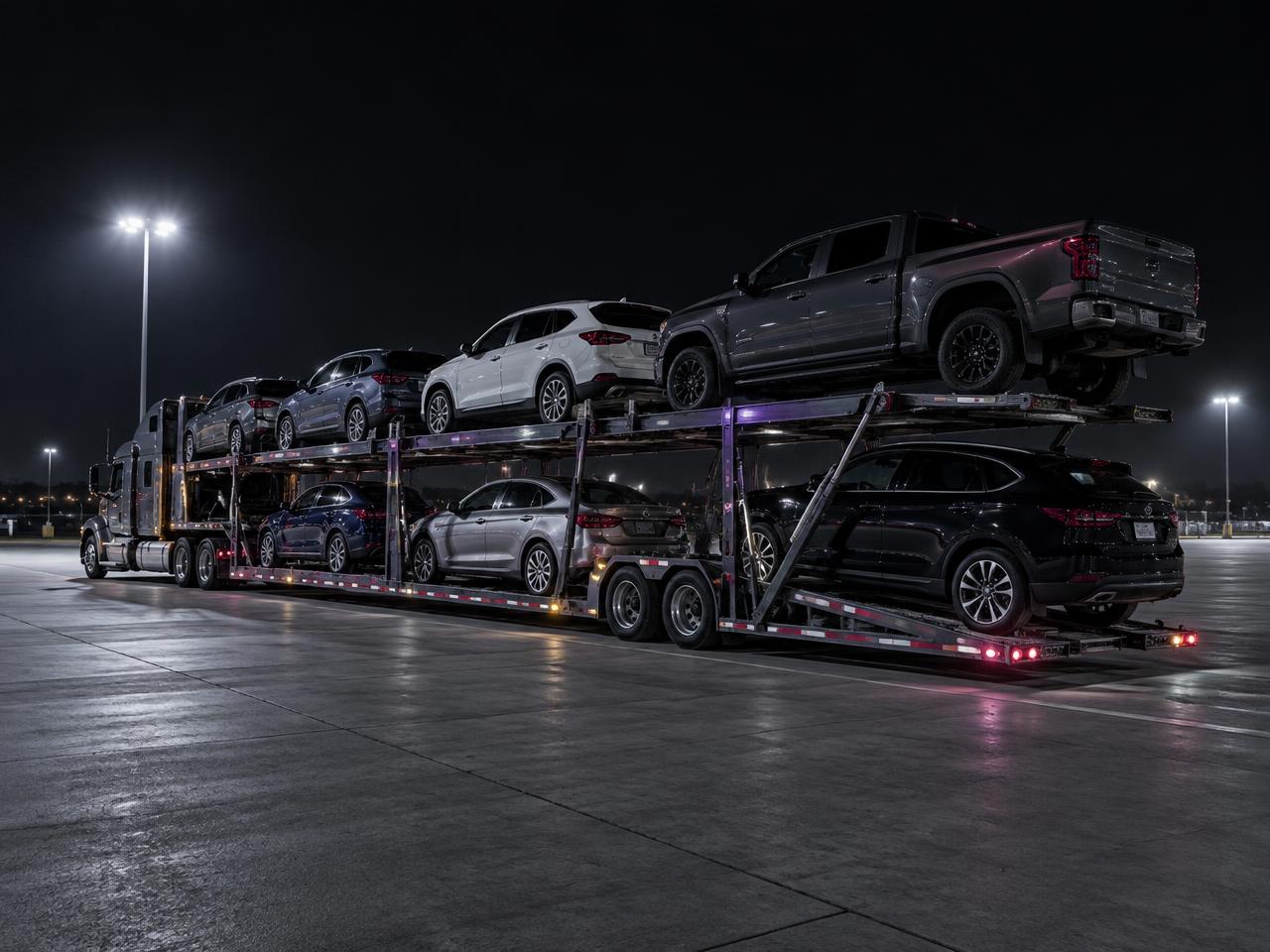
Open transport is the standard and most economical choice for the majority of New Mexico shipments, including everyday sedans, trucks, and SUVs common in the state. Enclosed transport is worth considering for vehicles making a longer haul through desert conditions where extra protection from sun, dust, or road debris matters, or for higher-value and classic vehicles.
Why people ship vehicles in New Mexico
Common reasons include relocation tied to jobs at Albuquerque's tech and aerospace employers or Los Alamos-area research institutions, moves connected to New Mexico's universities, military-family relocations, and snowbird-style seasonal moves given the state's mild winters in lower-elevation areas. Dealer and private-party vehicle purchases moving in from neighboring states are also common.
Getting ready for pickup
If you're outside a major city, confirm with your coordinator whether pickup will happen at your address or a nearby meeting point, since rural New Mexico addresses often call for the latter. Photograph the vehicle before pickup, check that it's clean enough to spot existing wear, and inspect it carefully at delivery before signing off.
Not sure which equipment or timing fits? How auto transport works walks through the process end to end, and car shipping costs explains every pricing input. You can also compare open and enclosed equipment, or contact us with the route.
Markets we coordinate
Albuquerque · Las Cruces · Rio Rancho · Santa Fe · Roswell · Farmington · Gallup
Transport in these areas is arranged through the carrier network. We do not operate offices or terminals in these locations.
Velocity Auto Transport Group LLC is an auto transport brokerage. We arrange vehicle transportation through qualified motor carriers and coordinate your shipment from quote to delivery — the carrier assigned to your vehicle operates the truck.
Corridors
Lanes that matter for New Mexico
Corridor density is one of the biggest reasons two shipments of similar distance price and schedule differently.
I-25 through New Mexico
The main north-south route linking Albuquerque, Santa Fe, and Las Cruces, extending toward Colorado to the north and Texas to the south.
I-40 through New Mexico
A major east-west route through Albuquerque connecting toward Texas and Arizona.
New Mexico – Texas
A frequent lane given the shared border and proximity of Las Cruces and Albuquerque to West Texas.
New Mexico – Arizona
A common regional lane along I-40, linking Albuquerque and Gallup toward Flagstaff and Phoenix.
Plan around this
New Mexico planning considerations
- High-elevation winter weather: Santa Fe and mountain-adjacent areas can see snow and ice even when lower desert regions stay mild.
- Summer desert heat: Extended sun exposure on an open trailer is generally fine but worth a pre-trip check on tires and fluids.
- Long rural distances: Many addresses off I-25/I-40 may need a nearby town meeting point instead of direct pickup.
Questions
New Mexico car shipping questions
Related guides
Keep planning your New Mexico shipment
Phoenix car shipping
City-level pickup and delivery detail.
Open guideDallas car shipping
City-level pickup and delivery detail.
Open guideArizona car shipping
Neighbouring state guide.
Open guideTexas car shipping
Neighbouring state guide.
Open guideColorado car shipping
Neighbouring state guide.
Open guideNationwide car shipping hub
How nationwide vehicle transport works, and every state guide.
Open guideGet a quote
Get a quote for your New Mexico shipment
Tell us the route, the vehicle and its condition. We review current carrier-market conditions on your lane and come back with a written quote we can stand behind.